
Cataract Surgery
Day-care surgery with modern lens options, explained honestly before you decide.
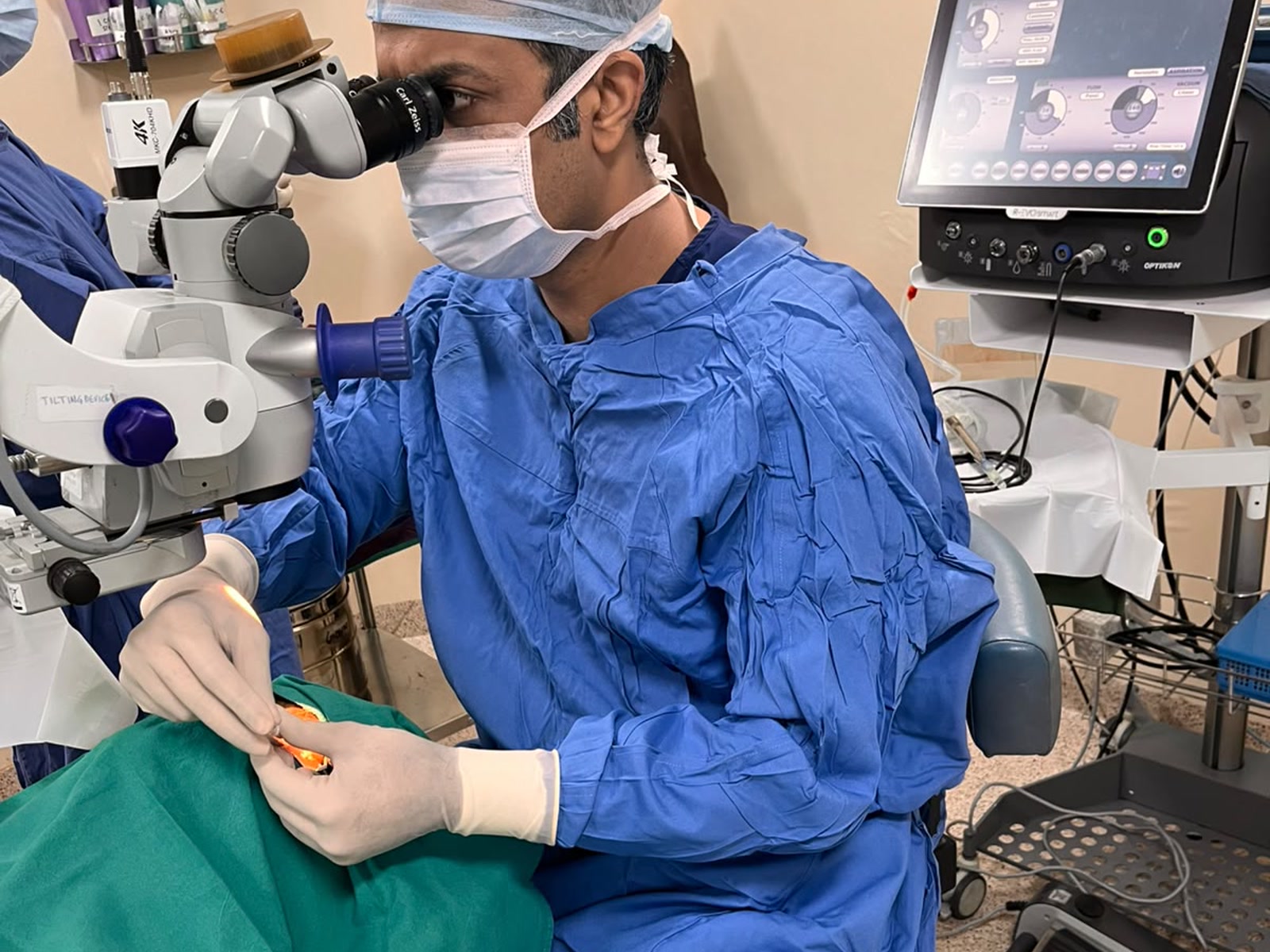
What this service covers
- Micro-incision (MICS), day-care procedure — home the same day
- Monofocal, toric and multifocal lens options
- Clear recovery guidance and scheduled follow-ups
Cataracts make the natural lens of the eye cloudy. Treatment is considered when that clouding begins to interfere with reading, driving, recognising faces or other daily activities. The purpose of the consultation is to confirm that a cataract is responsible for the change in vision and to discuss whether surgery is appropriate now or can safely wait.
When to arrange a cataract assessment
- Blurred, dim or hazy vision that is no longer corrected well by glasses
- Glare or haloes around headlights, especially when driving at night
- Colours appearing faded or needing brighter light to read
- Frequent spectacle changes without a lasting improvement
Examination and lens planning
A cataract assessment includes vision testing and an examination of the front and back of the eye. Measurements are taken to calculate the intraocular lens power. Existing astigmatism, retinal health, glaucoma and the visual demands of work or hobbies can all influence the lens discussion.
Monofocal, toric and multifocal lenses have different strengths and limitations. The surgeon explains which options are clinically suitable and what level of spectacle independence is realistic before a decision is made.
What to expect from surgery and recovery
Cataract surgery at the clinic is planned as a day-care procedure. The cloudy natural lens is removed through a small incision and replaced with the selected artificial lens. Anaesthesia, medicines and follow-up timing are confirmed for the individual patient.
Vision often improves as the eye settles, but recovery is not identical for everyone. Drops, eye protection, activity restrictions and review visits should be followed exactly as advised. Pain, a sudden drop in vision, increasing redness or new flashes and floaters need prompt clinical attention.
Frequently asked questions
How long does cataract surgery take?
The procedure itself takes about 15–20 minutes. It is a day-care surgery — you go home the same day. We use micro-incision (MICS) technique, so the incision is under 2 mm and usually needs no stitches.
Which lens is best for cataract surgery?
There is no single "best" lens — it depends on your vision, lifestyle and budget. Monofocal lenses give clear distance vision; toric lenses also correct astigmatism; multifocal lenses aim for both distance and near. We explain each option honestly before you decide.
Is cataract surgery painful?
No. The surgery is done under topical or local anaesthesia. You may feel mild pressure but no pain. Most patients are comfortable throughout and recover quickly.
Ready to see clearly?
Book a consultation — we'll examine your eyes properly and tell you honestly what they need. Nothing more, nothing less.
Opposite Metro Pillar 394, Sector 7.
Choose the patient, doctor, and a genuinely open time without leaving this page.