


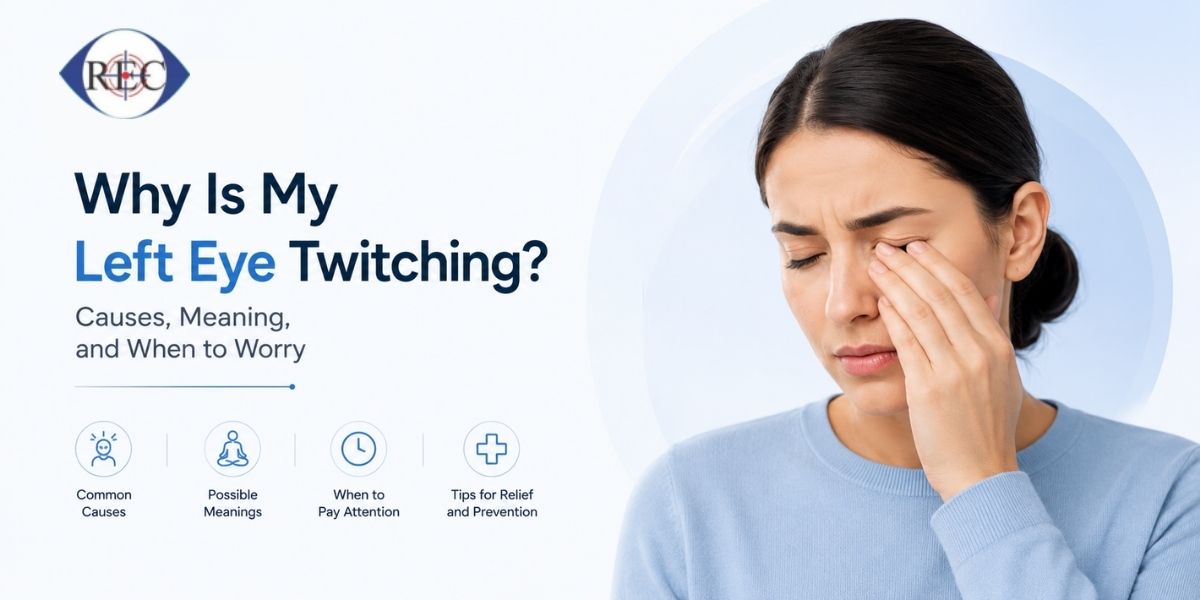
Why Is My Left Eye Twitching? Causes, Meaning, and When to Worry
Have you ever sat quietly at work, trying to finish one important task, and suddenly your eyelid starts dancing like it heard its favorite song? If yes, you are not alone. Eye twitching is extremely common, and in most cases, it is harmless. Still, when the twitch keeps returning, many people start searching for answers like “why is my left eye twitching randomly?” or “how to stop eye twitching naturally?”
The good news is this: most cases of left eye twitching happen because of stress, fatigue, screen overuse, caffeine, or dry eyes. However, some cases may point toward an underlying medical issue that needs attention from an experienced Eye Specialist in Rohini. If your symptoms continue for weeks, getting a professional eye check-up in Rohini can help identify the real cause early.
In this detailed guide, we will explain the real medical causes of left eye twitching, what the condition actually means, how to stop it, and when you should worry enough to visit a doctor. We will also clear up common myths because your eyelid is probably tired of carrying ancient superstition on its shoulders.
What Is Left Eye Twitching?
Left eye twitching refers to small involuntary muscle movements around the eyelid. Doctors often call this condition eyelid myokymia. The twitch may last a few seconds, several minutes, or return repeatedly throughout the day.
Some people describe it as:
Eyelid spasm left eye
Left eye fluttering reason
Involuntary blinking left eye condition
Eye muscle vibration
Persistent left eye twitch explanation
Usually, the twitch affects only one eyelid and does not cause pain. You may feel the movement more than you can actually see it.
According to the Mayo Clinic, common triggers include stress, fatigue, eye strain, caffeine excess, and irritation of the eye surface. These causes account for the majority of mild eye twitch cases.
Why Is My Left Eye Twitching? Common Causes Explained
1. Stress and Anxiety
Stress is one of the biggest reasons behind eye twitch stress and fatigue. Your nervous system reacts strongly when you are mentally exhausted. Long work hours, emotional pressure, poor sleep, and anxiety can overstimulate facial muscles and trigger involuntary eye movement.
Modern life does not help either. Emails, deadlines, traffic, and endless notifications turn many people into full-time stress managers.
If your twitching becomes worse during stressful periods, stress may be the real culprit.
2. Lack of Sleep and Fatigue
Sleep deprivation directly affects muscle and nerve function. When your body does not recover properly, tiny muscle spasms may appear around the eyes.
People who sleep less than 6–7 hours regularly often experience:
Left eye muscle spasm reasons
Random eyelid fluttering
Increased blinking
Eye irritation
Fatigue and eye twitching often go hand in hand. Your eyelid basically starts protesting against your lifestyle choices.
3. Digital Eye Strain
Spending hours staring at laptops and phones can strain eye muscles. Digital eye strain reduces blinking frequency, dries the eyes, and increases muscle fatigue.
This issue has become more common among:
Office workers
Students
Gamers
Remote employees
If your twitching starts after long screen sessions, your eyes may simply need rest.
Experts recommend following the 20-20-20 rule:
Every 20 minutes, look at something 20 feet away for 20 seconds.
Simple, effective, and much cheaper than arguing with your screen.
4. Too Much Caffeine
Coffee helps many people survive Monday mornings. However, too much caffeine intake can overstimulate muscles and nerves.
The American Academy of Ophthalmology and Mayo Clinic both list excess caffeine as a common trigger for eye twitching.
Energy drinks, strong coffee, and excessive tea consumption may increase eyelid spasms. Reducing caffeine often improves symptoms within a few days.
5. Dry Eye Syndrome
Dry eye syndrome irritates the eye surface and may trigger twitching. The problem appears more often in people who:
Use screens for long periods
Wear contact lenses
Stay in air-conditioned rooms
Spend time in dusty environments
Dryness can cause corneal irritation and increase involuntary blinking left eye condition symptoms.
A detailed Eye Check Up in Rohini can help detect dry eye problems before they worsen.
6. Nutritional Deficiencies
Some people experience twitching because of magnesium deficiency, Vitamin B12 deficiency, or electrolyte imbalance.
Although nutritional causes are less common, poor diet and dehydration can affect nerve signaling and muscle control.
Common contributing factors include:
Skipping meals
Poor hydration
Excessive alcohol consumption
Strict dieting
Balanced nutrition supports healthy nerve and muscle function.
Medical Conditions Linked to Left Eye Twitching
Most twitching cases are harmless, but persistent symptoms sometimes point toward medical conditions.
Blepharospasm
Blepharospasm causes repeated involuntary blinking and eyelid spasms. In severe cases, eyelids may close completely.
This condition differs from normal eyelid twitching because it becomes chronic and more disruptive over time.
Hemifacial Spasm
Hemifacial spasm affects muscles on one side of the face, including the eyelid. According to Mayo Clinic, it often happens when a blood vessel presses against a facial nerve.
Unlike mild twitching, this condition may spread beyond the eye area.
Neurological Disorders
Rarely, persistent twitching may connect to a neurological disorder such as:
Parkinson’s disease
Multiple sclerosis
Facial nerve irritation
These cases usually involve additional symptoms like facial weakness, muscle stiffness, balance issues, or speech problems.
Fortunately, serious neurological causes remain uncommon.
Eye Twitching Meaning: Should You Believe Superstitions?
Many cultures connect left eye twitching meaning with luck, bad news, or future events. Some believe it predicts money, while others think it signals stress or emotional imbalance.
Science disagrees.
Doctors link eye twitching to muscle activity, nerve stimulation, fatigue, and irritation — not future lottery numbers. Sadly, your twitching eyelid cannot predict cricket scores either.
Medical explanations remain far more reliable than internet superstition threads written at 2 AM.
How to Stop Eye Twitching Naturally
If you want to know how to stop eye twitching naturally, simple lifestyle changes often make a big difference. Reducing stress through meditation, light exercise, deep breathing, or short daily breaks can help relax facial muscles and lower twitching episodes. Improving sleep quality is equally important, as fatigue and sleep deprivation commonly trigger eyelid spasms. Aim for 7–8 hours of sleep and avoid excessive screen use before bedtime.
Limiting caffeine intake may also help, especially if you consume large amounts of coffee, tea, or energy drinks. Many people notice improvement within a few days after reducing caffeine. If dry eye syndrome or irritation causes the twitching, lubricating eye drops can provide relief. However, persistent symptoms should always be checked by an expert at Rana Eye Centre to identify the exact cause properly.
Since digital eye strain has become a major reason behind eye twitching today, taking regular screen breaks, lowering brightness, blinking more often, and following the 20-20-20 rule can help reduce strain on your eyes and eyelid muscles.
When Should You Worry About Left Eye Twitching?
Most twitching episodes disappear within days. However, certain symptoms require medical attention.
According to the Mayo Clinic guidelines, you should see a doctor if:
Twitching lasts more than a few weeks
Your eyelid closes completely during spasms
Twitching spreads to other facial muscles
You notice redness, swelling, or discharge
Your eyelid droops
You experience vision changes
Persistent left eye twitch explanation cases should never be ignored completely.
A qualified Eye Specialist in Rohini can evaluate whether the twitch relates to eye strain, nerve irritation, dry eye syndrome, or another medical condition.
How Doctors Diagnose Eye Twitching
During an eye examination, doctors evaluate several factors to identify the exact cause of eye twitching. They may check your vision quality, eyelid movement, dryness levels, eye surface irritation, and facial nerve function to rule out underlying conditions. If the twitching appears persistent or unusual, doctors may also recommend additional tests or a neurological evaluation. Getting an early eye check-up in Rohini can help detect serious causes early and provide the right treatment with peace of mind.
Can Eye Twitching Be Prevented?
Yes, in many cases, eye twitching can be prevented through healthy lifestyle habits. Proper sleep, stress management, hydration, balanced nutrition, and reduced caffeine intake can help lower the chances of recurring eyelid spasms. Limiting screen time and protecting your eyes from digital strain also supports better eye health. Regular eye exams at Rana Eye Centre can help detect early eye problems before they lead to chronic irritation or persistent twitching.
Why You Shouldn’t Ignore Persistent Left Eye Twitching
If you keep asking yourself, “why does my left eye keep twitching randomly?” the answer usually involves stress, fatigue, digital eye strain, or caffeine overload. Most cases are harmless and improve with better sleep, hydration, stress management, and reduced screen time.
Still, persistent twitching should not be ignored. Conditions like Blepharospasm, Hemifacial spasm, dry eye syndrome, or facial nerve irritation sometimes require medical attention.
The key is simple: do not panic, but do not ignore ongoing symptoms either. A professional evaluation from an experienced Eye Specialist in Rohini can help identify the exact cause and guide proper treatment before symptoms become more frustrating.
If your eye twitching continues frequently or starts affecting your daily life, consult the experts at Rana Eye Centre for a complete eye evaluation and personalized care. Early diagnosis can help prevent complications and keep your eyes healthy and comfortable. Because honestly, your eyelid deserves a break too.