


What Is the Difference Between an Optometrist and an Ophthalmologist During an Eye Check Up?
Understanding the difference between an Optometrist and an Ophthalmologist is important for choosing the right eye care during an eye checkup. An optometrist mainly handles routine eye examinations, v
Your eyes work hard every day. They help you read, drive, work, scroll through your phone and sometimes even find that missing TV remote that’s hiding in plain sight. However, many people get confused while booking an eye appointment as they are unable to figure out whether they should visit an Optometrist or an Ophthalmologist.
If you are planning an eye check up in Rohini, understanding the difference between these two eye care professionals can help you make the right decision for your vision and overall eye health. While both play important roles in eye care, their training, responsibilities, and treatment capabilities differ significantly.
At Rana Eye Centre, patients often ask this question during consultations. The answer depends on your specific eye care needs, symptoms, and medical history.
Understanding the Role of an Optometrist
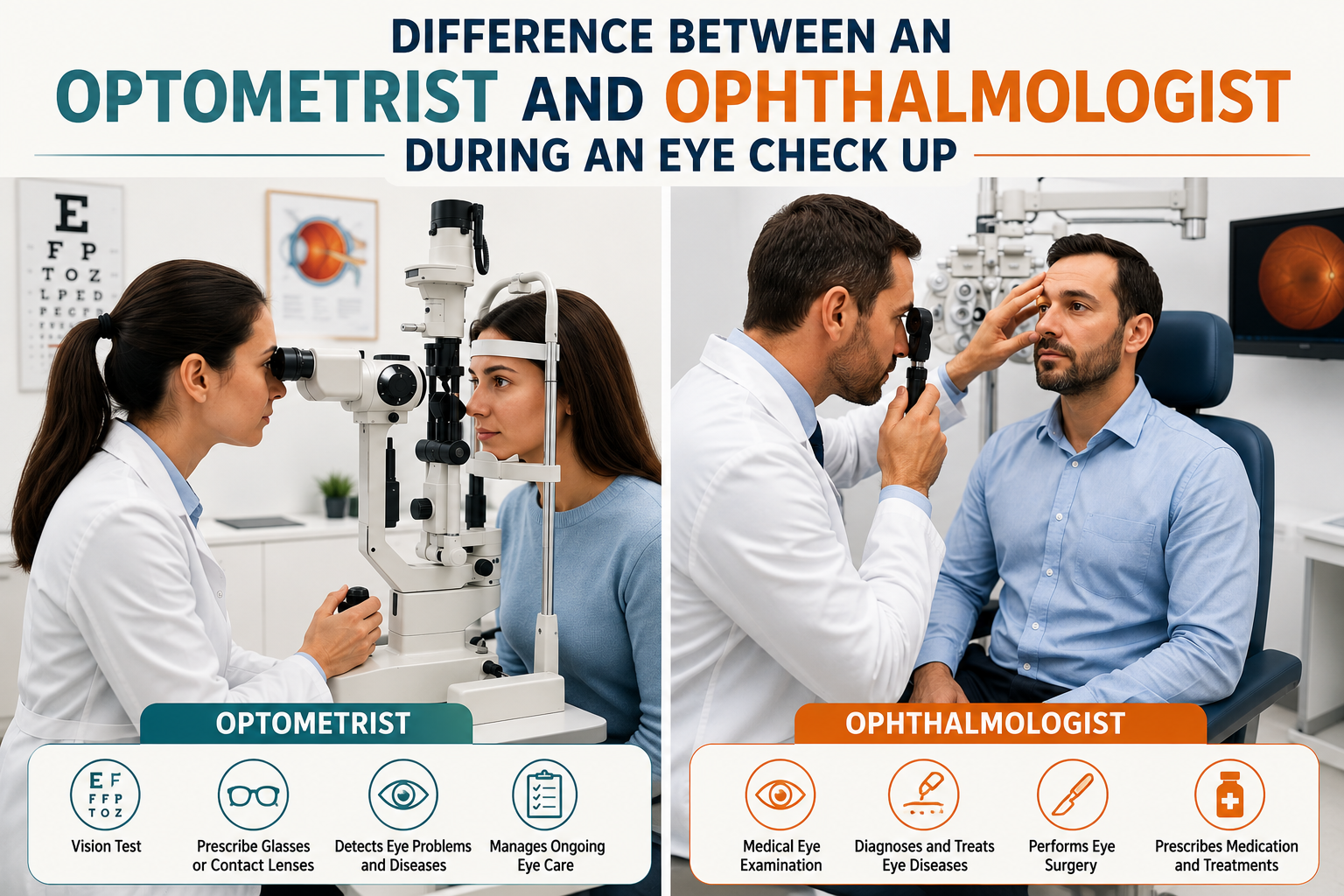
An Optometrist is a primary eye care professional who specialises in vision care, routine eye examinations, and the detection of common eye conditions. They complete professional optometry training and focus on maintaining good visual health through regular assessments and preventive care.
During a routine eye checkup, an optometrist typically performs:
Vision tests
Visual acuity assessments
Prescription evaluations for glasses or contact lenses
Eye pressure testing
Basic eye health screening
Detection of common vision problems
An optometrist can detect problems such as refractive errors, dry eyes and early signs of some eye diseases. They also prescribe Prescription lenses and recommend suitable options for Vision correction where needed.
A doctor of optometry is the first step in your eye care journey. An optometrist is like a family doctor for your eyes. He or she will take care of general vision problems and refer you to a specialist if you need more extensive treatment.
What Does an Ophthalmologist Do?
An Ophthalmologist is a medical doctor who specialises in the diagnosis, treatment, and surgical management of eye diseases and disorders. Unlike optometrists, ophthalmologists complete medical school and advanced surgical training focused on eye care.
An ophthalmologist can:
Perform comprehensive eye exams
Diagnose complex eye diseases
Treat serious vision disorders
Prescribe medications
Perform laser procedures
Conduct eye surgeries
Patients with conditions such as glaucoma, cataract, retinal diseases, diabetic eye complications, or eye injuries often require evaluation and treatment from an ophthalmologist.
In simple terms, if an optometrist identifies a problem that requires advanced medical or surgical care, they may refer the patient to an ophthalmologist.
Optometrist and an Ophthalmologist: Key Differences During an Eye Checkup
Understanding the difference between an optometrist and an ophthalmologist becomes easier when you compare their responsibilities during an eye examination.
Both professionals contribute to eye health, but their level of medical training and treatment capabilities differs significantly.
When Should You Visit an Optometrist?
An optometrist is often the right choice if you:
Need a routine eye checkup
Require a new glasses prescription
Want contact lens fitting
Experience mild vision changes
Need regular monitoring of vision health
Regular eye examinations help detect changes before they affect daily life. Even if your vision seems perfect, preventive screenings remain essential.
Why Regular Eye Health Screening Matters
Many serious eye diseases develop slowly and without obvious symptoms. Diseases like glaucoma frequently progress silently before the loss of vision is noticeable.
Regular eye health screening helps detect problems early so that treatment can begin before permanent damage occurs. A professional eye test can also detect signs of wider health problems such as diabetes and high blood pressure.
It’s a bit like ignoring the service schedule on your car because the engine still turns over. Everything is fine until the next big problem comes up.
Choosing the Right Eye Care Provider
Selecting between an optometrist and an ophthalmologist depends on your needs. For routine vision care, an optometrist usually provides excellent support. For complex medical conditions, advanced diagnostics, or surgery, an ophthalmologist offers specialised expertise.
Many leading eye care centres use a collaborative approach where both professionals work together to deliver comprehensive patient care. This model helps ensure accurate diagnosis, timely referrals, and effective treatment.
Patients seeking an eye specialist in Pitampura or nearby areas often benefit from choosing a centre that offers access to experienced ophthalmologists and comprehensive diagnostic services under one roof.
Why Patients Trust Rana Eye Centre
Experience and expertise matter when it comes to protecting vision. Rana Eye Centre is known for delivering professional eye care services with the help of modern diagnostic technology and experienced specialists.
Rana Eye Centre is dedicated to providing evidence-based treatment and patient-centred care, from routine eye checkups, advanced disease screening, cataract evaluation and glaucoma management to long-term vision care. They are committed to providing thorough eye exams and accurate diagnoses, allowing patients to make informed decisions about their eye health.
Don’t Ignore Vision Problems – Consult Rana Eye Centre Today
Finding the right eye care professional is the first step in protecting your vision, whether you need a routine checkup, a detailed vision assessment, or professional treatment for conditions like glaucoma and cataracts. Being aware of the difference between an Optometrist and an Ophthalmologist helps you make informed decisions about your eye health and ensures that you get the appropriate care for your needs.
At Rana Eye Centre, our experienced team is committed to providing comprehensive eye care through advanced diagnostic technology, thorough examinations, and personalised treatment plans. From regular eye examinations to specialised ophthalmic care, we focus on helping patients maintain healthy vision at every stage of life.
Schedule your appointment today and take a proactive step toward better eye health with trusted care from Rana Eye Centre.